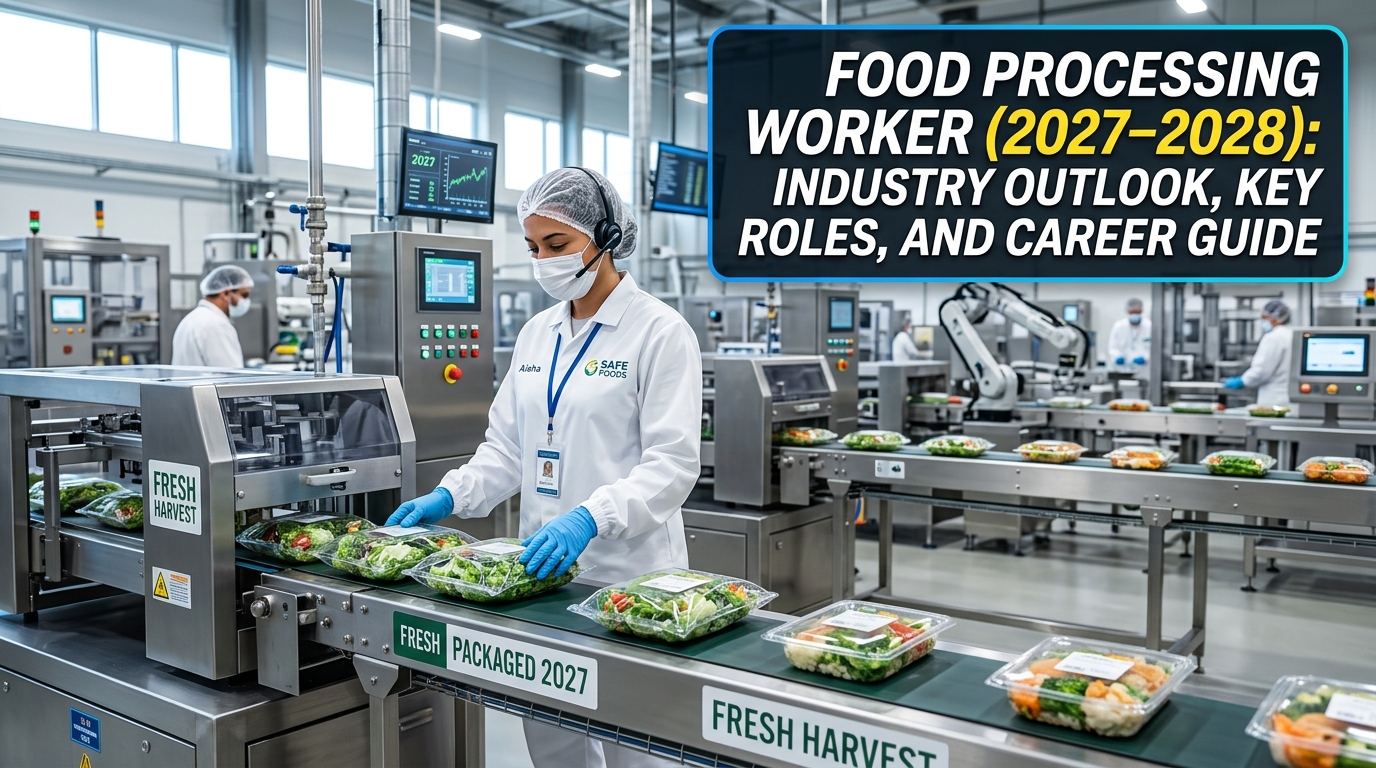
Driven by automated processing lines, high-throughput packaging networks, updated Hazard Analysis Critical Control Point (HACCP) regulations, and consumer shifts toward ready-to-eat and sustainable goods, the food manufacturing sector continues to expand. As production facilities modernize across North America, Europe, and global supply hubs, the demand for trained Food Processing Workers remains steady and resilient.
Modern food processing facilities rely on workers who combine foundational operational safety with technical capabilities in machine setup, hygiene compliance, and digital quality monitoring.
1. Key Role Overview & Core Responsibilities
A Food Processing Worker operates, monitors, and cleans specialized equipment used to transform raw agricultural, dairy, and livestock inputs into safe, commercially packaged food products.
Primary Operational Tasks
- Machine Operation: Operating automated equipment for sorting, mixing, cutting, cooking, pasteurization, and packaging.
- Quality Assurance & Inspection: Examining raw inputs and finished goods to ensure adherence to visual, structural, and weight specifications.
- Sanitation & Hygiene Standards: Cleaning and sanitizing work surfaces, lines, and machinery in accordance with HACCP, Good Manufacturing Practice (GMP), and national food safety guidelines.
- Packaging & Labeling: Managing high-speed wrapping, sealing, and labeling machinery while preparing goods for warehouse staging and cold-chain distribution.
- Safety Protocols: Following strict workplace safety standards, including Lockout/Tagout (LOTO) procedures, proper handling of sanitation chemicals, and Personal Protective Equipment (PPE) compliance.
2. Global Earning Benchmarks (2027–2028)
Compensation varies depending on geographic region, shift timing (night shift differentials), machinery specialization, and specific facility certifications:
| Experience / Role Level | Estimated Annual Salary (USD) | Estimated Hourly Rate (USD) |
| Entry-Level Processing Assistant | $33,000 – $39,000 | $15.50 – $18.50 / hr |
| Mid-Level Machine Operator | $41,000 – $49,000 | $19.50 – $23.50 / hr |
| Senior Line Technician / Sanitation Lead | $52,000 – $67,000+ | $25.00 – $32.00+ / hr |
Note: In addition to base pay, full-time positions regularly include medical coverage, shift premiums, paid annual leave, and overtime opportunities.
3. Essential Technical & Operational Skills
Modern food manufacturing environments value a balance between physical stamina, attention to detail, and digital literacy:
| Skill Category | Key Competencies |
| Machinery Operation | Basic setup and monitoring of automated mixers, slicers, extruders, thermoforming sealers, and sorting lines. |
| Regulatory Compliance | Mastery of HACCP principles, GMP standards, allergen control protocols, and sanitation logs. |
| Quality Control & Testing | Using digital scales, metal detectors, X-ray inspection devices, and Statistical Process Control (SPC) logs. |
| Workplace Safety & Sanitation | Proper chemical dilution, CIP (Clean-in-Place) procedures, LOTO execution, and non-slip/PPE safety protocols. |
| Operational Reliability | Ability to maintain high visual accuracy under fast-paced assembly conditions and tight schedule constraints. |
4. Work Environment & Shift Structures
- Temperature Variances: Depending on the sector (e.g., meat processing vs. commercial bakery operations), workers may spend shifts in temperature-controlled cold storage facilities (34°F–40°F / 1°C–4°C) or warm baking areas.
- Sanitary Gear (PPE): Mandatory use of protective uniforms, hairnets, beard nets, nitrile gloves, ear protection, and slip-resistant steel-toe boots.
- Continuous Operations: Facilities frequently run 24/7 schedules, providing options for morning, evening, overnight, or compressed weekend shifts.
5. Professional Advancement Pathways
Entry-level work on production lines offers clear opportunities for progression into specialized technical and managerial roles: