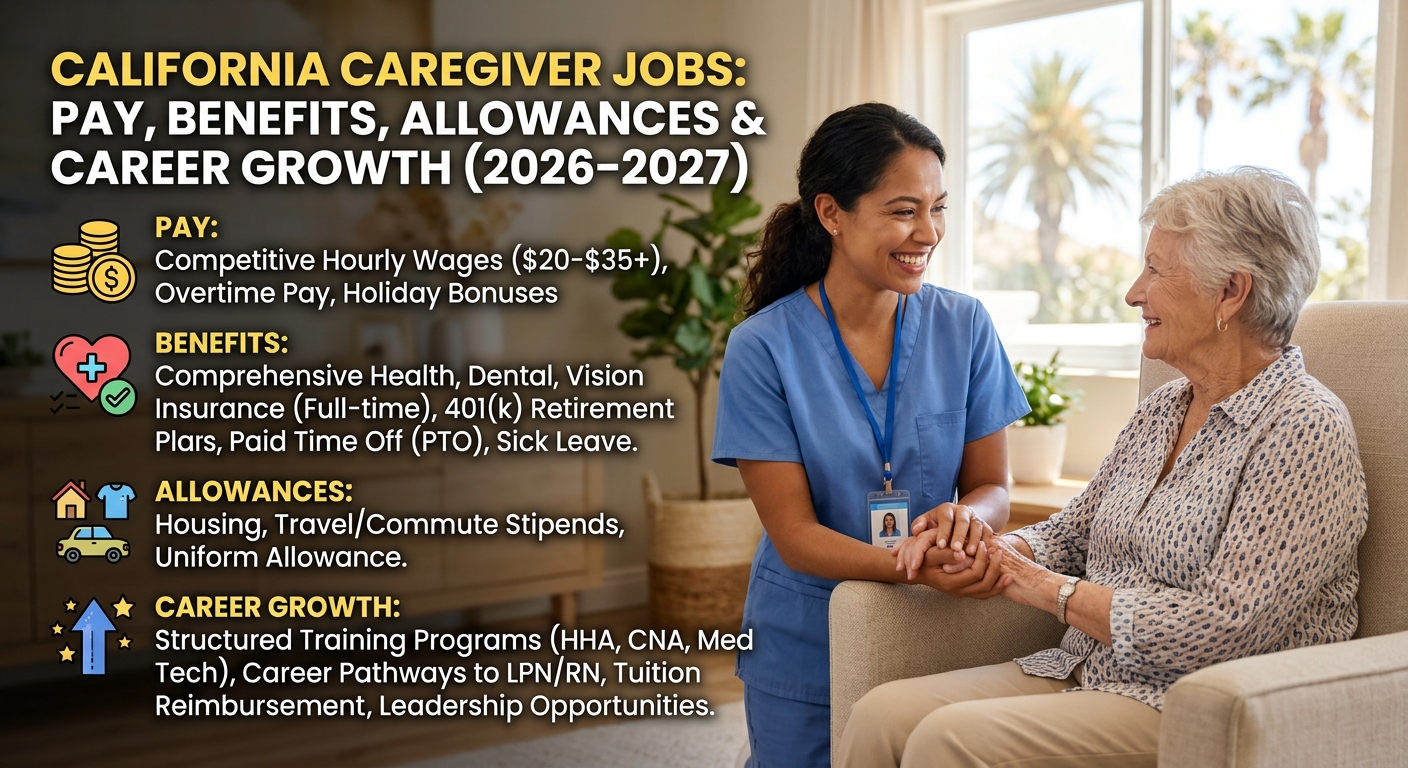
Caregiving in California offers a rewarding career path with high job demand, flexible working arrangements, and clear pathways to advance into healthcare. Whether working through private agencies, healthcare facilities, or the state’s In-Home Supportive Services (IHSS) program, understanding the compensation structure and benefits helps caregivers maximize their earning potential.
Below is an overview of caregiver salaries, mandatory benefits, allowances, core duties, and steps to build a career in California.
1. Caregiver Pay Standards & Salary Rates in California
Caregiver compensation varies across California based on employer type, geographical region, job specialization, and applicable labor regulations.
- Statewide Minimum Wage: $16.90 per hour (rising to $17.40/hour on January 1, 2027). Cities like San Francisco, West Hollywood, and San Jose enforce higher localized minimum wages.
- Healthcare Minimum Wage (SB 525): Caregivers directly employed by covered medical facilities, health systems, or skilled nursing centers earn $19.28 to $25.00 per hour, depending on facility size and category.
- Private Home-Care Agencies: Standard agency listings typically range between $18.00 and $25.00 per hour.
- IHSS Provider Rates: Established by individual counties, IHSS wages generally range from $17.00 to $21.00+ per hour.
Caregiver Earnings Summary Table
| Work Schedule | Hourly Rate | Approx. Weekly Gross | Approx. Monthly Gross |
| Part-Time (20 hrs/wk) | $18.00 / hr | $360 | $1,560 |
| Regular Part-Time (30 hrs/wk) | $20.00 / hr | $600 | $2,600 |
| Full-Time (40 hrs/wk) | $22.00 / hr | $880 | $3,813 |
| Specialized / Facility (40 hrs/wk) | $25.00 / hr | $1,000 | $4,333 |
2. Mandatory Benefits & Workplace Rights
California labor laws provide comprehensive protections and benefits for home-care aides and personal care attendants:
- Paid Sick Leave: Eligible caregivers, including IHSS providers, receive at least 40 hours (5 days) of paid sick leave annually.
- Overtime Protections: Under California’s Domestic Worker Bill of Rights, home caregivers earn 1.5× regular pay after working more than 9 hours in a day or 45 hours in a week. Facility caregivers typically earn daily overtime after 8 hours.
- Healthcare & Retirement Options: Full-time positions with licensed agencies or healthcare providers often offer medical, vision, and dental insurance, alongside 401(k) plans.
- Travel & Expense Reimbursements: California law requires employers to reimburse caregivers for business-related driving expenses (mileage) and mandatory travel time between client locations.
3. Caregiver Allowances & Extra Income Opportunities
Beyond base wages, caregivers can increase earnings through specific allowances and shift pay:
- Travel & Mileage Allowance: Reimbursement for transportation expenses when running errands or commuting between client homes.
- Shift Differentials: Bonus pay rates for working weekend shifts, overnight care (NOC shifts), or recognized holidays.
- Specialized Care Pay: Higher hourly rates for managing clients with specialized needs, such as advanced dementia, hospice care, or complex mobility assistance.
- Overtime Pay: Opportunities to accept extra shifts during peak demand periods.
4. Key Duties & Responsibilities of a Caregiver
Caregiver duties center around supporting client independence and daily living needs:
- Personal Care Assistance: Helping clients with bathing, dressing, grooming, and personal hygiene.
- Mobility & Transfers: Assisting clients in moving safely around the house, transferring from bed to wheelchair, and preventing falls.
- Household Support: Preparing nutritious meals, performing light housekeeping, managing laundry, and running errands.
- Health Monitoring: Tracking basic changes in health status, documenting routine care, and providing timely medication reminders.
- Companionship: Providing emotional support, cognitive engagement, and escorting clients to social activities or doctor visits.
5. How to Become a Caregiver in California
Starting a caregiving career requires minimal entry barriers:
- Meet Basic Requirements: Obtain a high school diploma or GED equivalent, maintain a clean background check, and secure CPR/First Aid certification.
- Complete Initial Training: Complete state-mandated training hours covering basic care techniques, safety protocols, and client privacy laws.
- Register on State Databases: For agency roles, register with the California Department of Social Services (CDSS) Home Care Aide Registry.
- Gain Hands-On Experience: Build practical skills working with home-care agencies, facility settings, or through the county IHSS program.